
Steam-Based Ice Dam Removal
Melts a safe drainage channel through the ice — no chipping, no salt, no shingle damage.
An ice dam doesn't wait for a convenient thaw — it forces meltwater under your shingles and into your ceiling while you sleep. Senco provides safe, steam-based ice dam removal and roof snow removal for homes across Tewksbury, Billerica, and the surrounding towns, with a 48-hour response every winter.
4.7 · 80 Google Reviews 48-Hour Response Licensed & Insured
Free, no-obligation — we reply within 24 hours.
48Hour
Response
Winter doesn't keep business hours, and neither do we. Senco holds a 48-hour response time on ice dam and roof snow removal calls across Tewksbury and Billerica all winter long — with a free, no-obligation assessment before any work begins.
If you're searching for ice dam removal near you in Tewksbury, Billerica, or a neighboring town, here's the short version: an ice dam is a solvable problem if it's handled the right way, and a roof-and-ceiling problem if it isn't. Senco is based right here in Tewksbury, MA, and our crews clear ice dams and roof snow safely, every winter, without the shortcuts that damage shingles or make the leak worse.
Heat escaping through your attic warms the upper roof deck just enough to melt the snow sitting on it. That meltwater runs down the roof until it reaches the cold overhang above your gutters — where there's no heat underneath — and refreezes. Layer by layer, that refreezing builds a ridge of ice at the eave. The ridge is the "dam": it blocks the water behind it from draining off the roof, so it has nowhere to go but sideways and backward, under your shingles.
Shingles are built to shed water running downhill, not to hold back standing water. Once an ice dam forces meltwater uphill under the shingle line, it finds every seam, nail hole, and lap in the underlayment. From there it soaks the roof sheathing, saturates attic insulation, and shows up inside your house as a stained ceiling, a bubbled wall, or water at a window trim — often nowhere near where the dam actually formed. If an ice dam has already caused a leak inside your home, our team handles the interior damage the same way we handle any storm leak — see our roof leak repair page.
A lot of homes in Tewksbury and Billerica are older colonials, framed to snow-load standards from decades ago. A couple of feet of wet, heavy New England snow adds real weight — especially where it drifts against a valley, a roof-to-wall transition, or a lower roof pitch below a taller one. Add an ice dam already sitting at the eaves, and that combined weight stresses rafters, sheathing, and gutters at the exact same edge of the roof. If your roof is sagging, groaning under load, or you're just not sure it's holding up, we'll take a look — and if the roof itself is aging out, our roof replacement page covers what that looks like.
Four methods get tried every winter, and they are not equally safe on a cold roof. Here is what each one actually does.
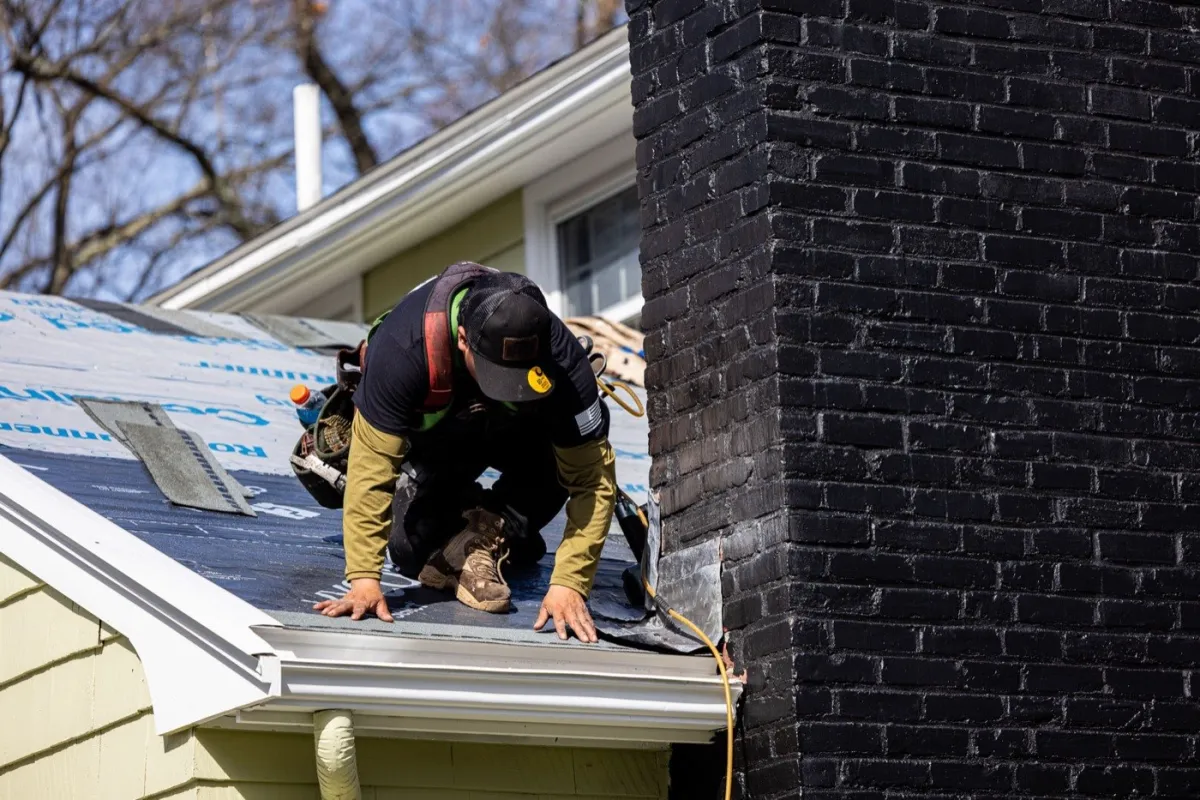
Steam. This is what a contractor brings, and it's the only method that clears a dam in an afternoon without touching the shingles. Low pressure, hot water, melting a drainage channel straight down to the roof surface.
A roof rake. You can do this yourself, from the ground. Pulling snow off the bottom three or four feet of roof takes away the fuel the dam needs to keep growing. Stay on the ground, keep the pole well clear of the power line coming into the house, and stop before you find yourself reaching.
Calcium chloride. Slow, but it buys you time. Fill a leg of old pantyhose, then lay it across the dam so it runs from the roof toward the gutter, and it will melt a drain channel through the ice over a day or two. Check the bag says calcium chloride. Rock salt corrodes shingles, gutters, fasteners, and whatever is planted underneath.
Chipping at it. Hammers, hatchets, chisels, and pressure washers are how roofs end up with holes in them. The ice is frozen to the shingle, so it comes away with granules and sometimes whole tabs attached, and none of that shows until the spring thaw. If a crew offers to chip your dam off, that is the wrong crew.
If water is already coming through a ceiling, skip all of it and call us. Every hour that water sits inside the wall costs more than the removal does.
We remove ice dams with low-pressure steam, not axes, hammers, or rock salt. Steam melts a clean channel through the ice down to the shingle line, giving trapped water a path to drain off the roof — without chipping shingles, stripping granules, or driving more water underneath, which is exactly what happens with a pick or a bag of salt. It's slower than hacking at the ice, and it's the only method we consider safe for an asphalt shingle roof.
Where excess snow is adding weight or feeding the next ice dam, we clear it from the roof edges, valleys, and problem areas with roof-safe tools — never a shovel dragged straight across shingles. The goal is to reduce load and starve the next dam before it forms, not to strip the roof bare.
Three things set the price: how much ice is up there, how many sides of the house it is on, and how hard the roof is to reach safely in February. One dam over a garage is straightforward. A full perimeter on a two-story colonial after a week of freeze and thaw takes longer and takes more crew.
You get the number before we start, and it does not move once we are on the roof.
Call your insurer either way. Policies differ on whether they cover the removal, but interior water damage from an ice dam is often covered, and we will document what we find if you need it for a claim.
Removal solves the emergency; two things actually prevent the next one. First, attic insulation and ventilation — keeping the whole roof deck a consistent cold temperature so snow melts evenly (or not at all) instead of melting up top and refreezing at the eaves. Second, clear gutters and downspouts — a clogged gutter holds meltwater right where an ice dam already wants to form, making a bad situation worse. Clean, well-sealed gutters are one of the simplest ways to cut ice dam risk; see our seamless gutter installation page.
Heat cables come up a lot, and they are worth understanding before you buy any. Run along the eave in a zigzag, they keep a drain channel open so meltwater has an escape route. They do not stop the dam from forming, they cost money to run all winter, and they need replacing every few years. On a roof with an insulation or ventilation problem underneath, a heat cable treats the symptom and leaves the cause alone. Worth it on one stubborn trouble spot, not worth it as a whole-roof plan.
Here's the whole problem in one picture: a cutaway of a New England roof, from the warm living room up to the snow on the shingles. Step through a bad winter week — then flip to the fix and run the same storm again.
Want the full story — causes, prevention, and what's safe to do yourself? Read our guide: what causes ice dams and how to prevent them.
Melts a safe drainage channel through the ice — no chipping, no salt, no shingle damage.
Reduces structural load and starves the next ice dam before it forms.
Already have water inside? We trace and repair the leak, not just melt the ice.
Clogged gutters trap meltwater right where ice dams form first — we clear the path.
Uneven roof-deck temperature is the root cause of most repeat ice dams — we assess it.
Active leak or a groaning roof? 48-hour response time, every call, all winter.
Ice dams that come back to the same spot every winter usually point to an insulation, ventilation, or gutter issue underneath — not bad luck. We'll tell you which one it is.
Ice dam removal is easy to do badly — chipping ice or dumping rock salt on a roof can crack shingles and cause more leaks than it fixes. Our crews are CertainTeed Shingle Master Certified, fully licensed and insured, and seven years into clearing Tewksbury and Billerica roofs every winter the safe way.
· 80 Google Reviews
We had an excellent experience with Senco. Chris was amazing! He was professional, patient, explained things clearly and answered all our questions. He always returned our phone inquiries. He and his workers went above and beyond our expectations. His crew replaced our roof in one day. Clean up was great. We also had Senco remove the ice dams prior to having the roof replaced. Once again, Senco's pricing was fair, the crew was hard working and responsive to any concerns we may have had. I highly recommend this company and would use them again.Elaine Levine · Google Review
Senco did many homes in my neighborhood. I recognized their competence, honesty and quality right away and knew I had to have the Senco team on my roof too. Very satisfied with all aspects of the demolition and installation which was quite complex. Replaced facia boards with AZEK, new gutters, and a new roof. Thanks again Senco!! Excellent job!!Jim O. · Google Review
Owner, Chris, was extremely knowledgeable and very professional. He always responded promptly to our questions and we always felt we were important to him. His crew worked so great together, like they never had to ask each other for anything, they just knew what was next. The job was started earlier than planned and everything was done above and beyond what one would expect. We would, and have, already recommended Senco Home Services to other homeowners and look forward to having him back to replace our old windows. Thank you, Chris, for making this an easy decision for us and for providing quality workmanship. Stephen and Melissa Spinosa in BurlingtonJenna Spinosa · Google Review
One bad ice dam is bad luck. The same spot damming up every single year usually points to a gutter, insulation, or ventilation issue — or a roof getting close to the end of its life. We'll look at the whole picture, not just melt the ice and leave.
Prevention work is financing-eligible too — see your financing options →
· 80 Google Reviews · 48-hour response, all winter · Free, no-obligation — we reply within 24 hours.
Ice dam & roof snow removal questions
It depends on your policy — many homeowner's insurance policies cover sudden water damage caused by an ice dam, like a stained ceiling or soaked insulation, but coverage for the removal service itself varies by carrier and policy. We recommend calling your insurance company to confirm your specific coverage; if you do have interior damage, we can document what we find to help support a claim.
We hold a 48-hour response time on ice dam and roof snow removal calls all winter long across Tewksbury, Billerica, and the surrounding towns. If water is actively coming through your ceiling, tell us when you call and we'll move you to the front of the line.
No — that's exactly why we use it. Low-pressure steam melts a channel through the ice so water can drain off the roof, without the chipping, hacking, or rock salt that can crack shingles, strip granules, or force even more moisture underneath. It's the safest removal method for an asphalt shingle roof.
The giveaways are a thick ridge of ice along your roof's edge, icicles hanging off the gutters, and — the one that matters most — water stains on an interior ceiling or wall near an exterior wall. If you're seeing any of those, call us before it turns into a bigger repair.
On older New England homes, yes. Many Tewksbury-area colonials were framed to snow-load standards from decades ago, and a few feet of wet, heavy snow — especially where it drifts against a valley or roof-to-wall transition — adds real weight on top of whatever ice has already built up at the eaves. If your roof is groaning, sagging, or you're just not sure, we'll take a look.
The two levers that actually matter are attic insulation and ventilation, so your roof deck stays a consistent cold temperature instead of melting snow unevenly, and clear gutters, so meltwater has somewhere to go instead of backing up at the eaves. We can assess both during a free estimate — see our seamless gutter installation page for the gutter side of it.
When the snow piles up, we're fastest to reach Tewksbury and Billerica — but our winter crews clear ice dams and heavy roof snow load across all of Northeastern Massachusetts. Don't wait for the thaw and the leaks that follow; call now if you're in one of the towns below.
Emergency winter work and the follow-up repairs are financing-eligible — see your financing options →